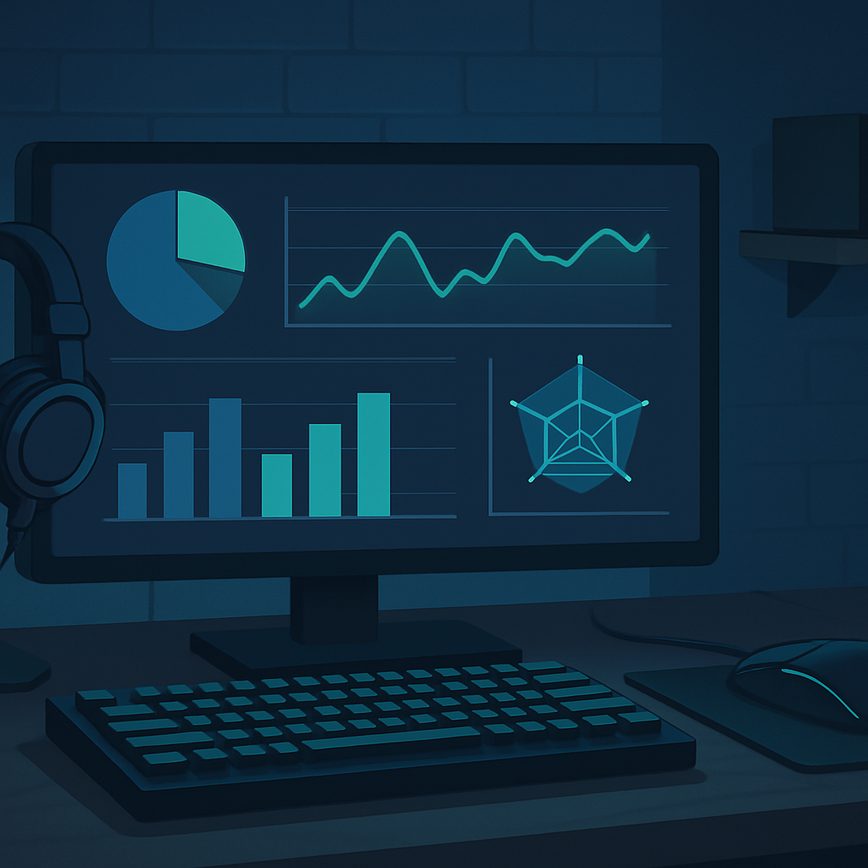
Introduction to Stats and Analytics in Gaming Clans
In the competitive world of gaming clans, the use of stats and analytics has become an indispensable tool for enhancing clan performance. These data-driven insights allow clans to move beyond mere intuition and make informed decisions that can significantly impact the outcome of their matches and overall team success.
Gaming clans that leverage stats analytics gain a clearer understanding of their strengths and weaknesses. By examining in-game statistics such as kill/death ratios, objective control, resource management, and individual player contributions, clans can assess how well each member is performing. This level of analysis helps identify areas where players excel as well as aspects needing improvement, which is crucial for targeted training and strategy development.
Moreover, stats and analytics provide a comprehensive view of the clan’s overall performance trends. By tracking metrics over time, clans can detect patterns and tendencies in gameplay, allowing them to anticipate opponents’ strategies and adjust their tactics accordingly. This predictive capability not only enhances real-time decision-making during matches but also supports long-term planning for tournaments and competitive seasons.
The integration of analytics also fosters better communication and coordination among team members. With clear, data-backed feedback, players can have objective discussions about their gameplay and develop collective strategies that align with the clan’s goals. This collaborative approach, underpinned by stats, helps to build a cohesive team dynamic and strengthens the clan’s competitive edge.
In summary, the importance of stats and analytics in gaming clans cannot be overstated. Utilizing detailed data insights enables clans to enhance individual and team performance, refine their strategies, and ultimately increase their chances of success in highly competitive gaming environments. Embracing a culture of analytics turns raw data into actionable knowledge that propels gaming clans to new heights.
Why Stats Matter in Competitive Gaming
In the realm of competitive gaming, understanding and leveraging game stats and player metrics is essential for success. Tracking these statistics provides an objective way to measure individual skill levels and overall team performance. By analyzing data such as kill-to-death ratios, accuracy percentages, objectives completed, and other relevant player metrics, teams can identify strengths and weaknesses more accurately than relying on subjective impressions alone.
Game stats offer critical insights that competitive players and clans can use to tailor their strategies and make informed decisions. For instance, knowing which players excel in certain roles or how cohesive the team performs under pressure allows coaches and leaders to optimize lineups and in-game tactics. Without these analytics, improving team dynamics and personal skills can become a slow, guesswork-driven process.
Moreover, consistently monitoring player metrics helps track progress over time, motivating gamers to refine their techniques and achieve higher levels of play. It also plays a significant role in scouting potential new members who exhibit promising statistics, ensuring the clan remains competitive. In summary, utilizing stats in competitive gaming transforms raw data into actionable strategies that drive better performance and sustained success.
Types of Analytics Used by Gaming Clans
Gaming clans widely use performance analytics to gain a competitive edge and improve team outcomes. One of the most common forms of game analytics monitored by clans is kill/death ratios. This statistic reflects a player’s effectiveness in eliminating opponents while minimizing their own deaths, offering a clear measure of individual skill and survivability within matches.
Win rates are another essential metric, providing insight into the overall success of a player or team across different games and tournaments. Measuring win rates helps clans evaluate strategies, roster changes, and game adaptations, forming the basis for decisions that can boost their competitive standing.
Beyond individual stats, clans also focus on teamwork dynamics via player statistics and game analytics that reveal how well members collaborate during matches. This includes tracking assists, coordinated attacks, and communication efficiency. Together, these analytics offer a holistic view of how the clan functions as a cohesive unit and highlight areas needing improvement to enhance synergy and tactical execution.
By consistently analyzing these performance analytics—kill/death ratios, win rates, and teamwork dynamics—gaming clans can make data-driven decisions that drive improvement and foster a stronger, more united team.
Implementing Analytics Tools in Your Clan
Choosing the right analytics tools is essential for any gaming clan looking to enhance their performance and gain a competitive edge. Analytics tools provide insights into player behavior, game performance, and overall clan dynamics, enabling informed decisions based on real data rather than intuition alone. When selecting analytics software, it’s important to focus on solutions tailored to the specific needs of gaming clans, capable of robust data tracking and detailed reporting.
Start by identifying what key metrics your clan wants to track. These could include win/loss ratios, individual player statistics, in-game resource usage, or communication patterns. Clear objectives will help narrow down the analytics tools that offer the required functionality, ensuring you avoid unnecessary features that clutter the experience or inflate costs.
Popular gaming software often comes with built-in analytics tools, but many clans opt for specialized third-party platforms that offer deeper customization and integration capabilities. Look for tools that allow seamless data import from your clan’s primary gaming platforms and provide visual dashboards to help clan leaders quickly interpret data without needing advanced technical knowledge.
Once you’ve selected your analytics software, proper setup is vital. This involves configuring data tracking to capture relevant in-game events and ensuring permissions are set correctly for team members who need access to data reports. Most analytics tools support automated data collection, which minimizes manual input and helps maintain real-time insights.
Encourage your clan to regularly review analytics reports and use the data to inform strategy adjustments, training focus, and teamwork improvement. Sharing insights transparently builds trust within the clan and fosters a data-driven culture that strives for continuous optimization.
Ultimately, the success of implementing analytics tools in your clan depends on choosing software that aligns with your goals and technical setup, setting up efficient data tracking processes, and actively interpreting the data to drive performance. With the right approach, analytics tools become powerful allies in climbing the ranks and dominating your gaming sphere.
Popular Analytics Platforms for Gaming Clans
Gaming analytics platforms have become essential software tools for clans looking to gain a competitive edge. These platforms provide detailed stats and reporting that help monitor clan performance and track player improvement over time. By utilizing advanced clan tools, leaders can make informed decisions based on comprehensive data rather than intuition alone.
One of the most popular platforms is StatTrack, which offers in-depth analysis of player metrics such as kill/death ratios, win rates, and game-specific performance indicators. Its easy-to-use interface allows clan managers to set benchmarks and track progress effortlessly, making it a favorite among competitive teams.
Another widely used software is ClanMetrics, designed specifically to meet the needs of gaming clans. It provides detailed reports on not only individual player stats but also overall clan dynamics and growth trends. This software excels in offering visual dashboards that summarize key performance areas in real time.
For clans looking for mobile accessibility, GamePulse is an excellent choice. This app-based solution gives instant access to analytics, enabling players and leaders to review match statistics from anywhere. It supports various games and syncs data across devices, ensuring the clan stays updated on crucial stats at all times.
In conclusion, leveraging gaming analytics platforms and clan tools is crucial for clans aiming to enhance their strategies and improve player skills systematically. These platforms not only provide valuable stats but also foster a data-driven approach that drives sustained competitive success.
Integrating Analytics into Daily Clan Activities
Incorporating analytics into daily clan activities can significantly enhance clan training by enabling data driven decisions that improve gaming strategies. Begin by integrating performance metrics into practice sessions, where each member’s statistics inform personalized training focuses. For example, analyzing accuracy, reaction times, and kill/death ratios helps identify specific weaknesses to target during drills.
During strategy planning, leverage analytical insights to develop adaptive gameplay approaches. Reviewing past match data such as map control percentages, team positioning heatmaps, and engagement outcomes allows the clan to refine tactics and predict opponents’ moves. This creates a dynamic environment where strategies evolve based on concrete evidence rather than guesswork.
Match reviews are another vital opportunity to use analytics efficiently. Post-game breakdowns focused on metrics like objective completions, damage dealt, and player movement patterns enable the clan to assess overall performance comprehensively. These insights facilitate constructive feedback and promote collaborative learning, ensuring continual improvement in competitive play.
By embedding data driven decisions into training, planning, and reviews, clans develop a disciplined approach that maximizes their potential. This analytical mindset not only boosts individual skill but also strengthens team cohesion, making the clan more formidable in competitive gaming environments.
Maximizing the Benefits of Clan Analytics
Gaming clans looking to improve gaming performance can greatly benefit from the strategic use of clan analytics. By systematically gathering and analyzing data on player performance, team dynamics, and opponents’ patterns, clans can unlock valuable insights that lead to better teamwork and more effective strategy optimization. This data-driven approach not only sharpens in-game tactics but also fosters an environment of continuous improvement and growth within the clan.
One of the key advantages of leveraging clan analytics is the ability to identify individual and collective strengths and weaknesses. Clans can use these insights to tailor training sessions and align team roles more effectively, ensuring that each member contributes to their fullest potential. For example, data might reveal a player’s exceptional skills in a particular map or mode, prompting the clan to assign them specific roles that maximize their impact during matches.
Strategic adjustments also become far more precise with access to analytics. Instead of relying on intuition alone, clans can review match statistics to understand which strategies worked best against certain opponents, which maneuvers led to successful objectives, and where missteps occurred. This information helps teams refine their playbooks, develop counter-strategies, and adapt quickly to shifting game dynamics. The result is a more agile and responsive clan, better prepared to tackle competitive challenges.
Beyond immediate gameplay improvements, clan analytics plays a critical role in facilitating long-term clan growth. Data insights can highlight trends in member participation, performance progression, and even community engagement. Leaders can use this information to foster a healthy competitive culture, recruit new members strategically, and set achievable goals that promote sustained success. Tracking growth metrics ensures that the clan evolves in a way that supports its ambitions and preserves team cohesion.
In summary, the smart use of clan analytics empowers gaming groups to improve gaming outcomes by enhancing teamwork, enabling nuanced strategy optimization, and supporting ongoing clan growth. Clans that embrace this data-centric approach position themselves for lasting competitive advantage and a stronger, more united community.
Using Analytics to Foster Team Communication
Sharing stats and analytics within gaming clans plays a crucial role in enhancing team communication. When clan members have access to clear data insights about their performance and gameplay patterns, it opens up transparent channels for discussion. These insights allow players to identify strengths and weaknesses collectively, promoting a culture of constructive feedback rather than blame.
Regularly reviewing statistical data encourages clan members to participate in strategy sessions with a shared understanding of the team’s current status. This collaborative decision-making process is more effective because it is grounded in factual information rather than assumptions. As a result, the clan can adjust tactics, allocate roles, and improve coordination effectively.
Moreover, data-driven communication fosters trust among teammates, as everyone has equal access to the same performance metrics. This shared knowledge helps prevent misunderstandings and miscommunications that can arise from subjective opinions. By using analytics as a common language, gaming clans can build stronger internal connections and work together to achieve their goals.
In summary, leveraging team communication through shared stats and analytics is an invaluable tool for any gaming clan. It empowers members to make informed decisions, encourages open dialogue, and ultimately drives the clan toward greater success through unity and collaboration.
Tracking Progress and Setting Goals with Data
Gaming clans leverage progress tracking through detailed analytics to monitor player improvement over time. By examining performance metrics such as kill/death ratio, win rates, and objective completions, clans can gain a clear picture of each player’s growth. This data-driven approach allows clans to identify strengths and areas needing improvement, ensuring targeted training and practice sessions.
Beyond individual assessment, clans use these performance metrics to set measurable gaming goals that align with overall team objectives. Clear, data-supported goals motivate players and provide benchmarks for success, making progress tangible and attainable. For example, a clan might set a goal for players to increase their accuracy rate by a specific percentage within a set timeframe, tracked continuously through analytics tools.
Regularly reviewing progress tracking data helps clans adjust their strategies and training plans based on real results. This iterative process fosters a culture of accountability and continuous improvement within the team. Ultimately, by integrating analytics into goal setting, gaming clans enhance both individual player development and collective performance, driving their success in competitive gaming environments.

Ever since I built my first gaming PC in high school, I’ve been obsessed with the social side of multiplayer games and the bonds formed within competitive clans. I spend my weekends coordinating strategies and exploring how digital communities thrive, focusing on teamwork over individual stats. My goal is to share stories that bring players together and highlight the true camaraderie found in virtual worlds.